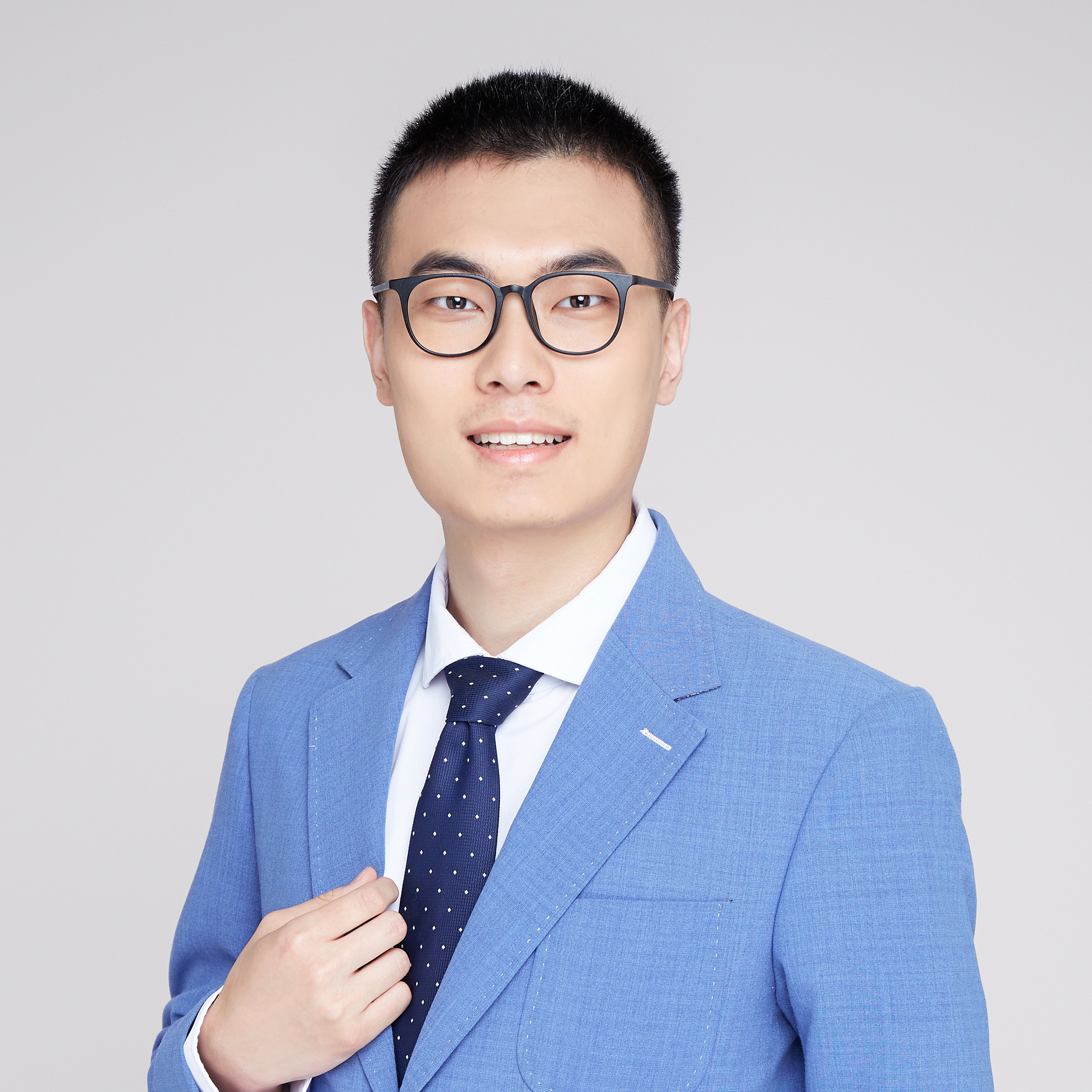
About me
Hi, I’m Dr. Ziqi Guo, a Machine Learning Researcher at Apple Inc., specializing in Scientific Machine Learning (SciML) and High-Performance Computing. My passion lies in accelerating scientific discovery by bridging the gap between rigorous engineering simulations and data-driven intelligence to solve critical challenges in energy, thermal management, and sustainability.
I obtained my Ph.D. degree in Mechanical Engineering at Purdue University, co-advised by Prof. Xiulin Ruan and Prof. Guang Lin.
I bring cross-functional collaboration skills and deep expertise in AI4Science and Scientific Computing, leveraging deep learning, predictive modeling, and large-scale simulations to solve complex engineering problems. My work integrates advanced deep learning architectures with high-performance computing (GPU acceleration) to bypass traditional bottlenecks, resulting in novel solutions for energy efficiency, battery modeling, and thermal management.
I have led initiatives to develop physics-informed machine learning (PIML) models that predict and optimize material properties by bridging the gap between quantum-mechanical calculations and macro-scale simulations. These efforts have directly advanced the capability to perform inverse design and optimization for battery, thermal, fluid, and optical systems.
I’ve also developed rigorous numerical solvers and two widely adopted open-source software packages, FourPhonon v2.0 and FOS, providing critical tools for the advancement of next-generation energy storage systems.
Key strengths include:
- AI-Driven Scientific Discovery: Expertise in utilizing Generative AI and Machine Learning to accelerate material discovery and achieve inverse design.
- High-Performance Computing: Advanced proficiency in parallel computing (MPI/OpenMP) and GPU acceleration (CUDA/OpenACC), reducing simulation times by 100x-10000x.
- Multiphysics Simulation: Proven ability to model thermal, fluid, optical, and battery systems using advanced numerical methods (MD, DFT, FEA).
- Domain Expertise in Energy Systems: Deep understanding of transport mechanisms, including phonon scattering and radiative cooling, applied to real-world engineering challenges.
- Research & Software Engineering: Demonstrated success in defining technical strategy, developing scalable open-source tools, and executing end-to-end research pipelines.
Recent News
Selected Publications
Ziqi Guo, Dudong Feng, Daniel Carne, Guang Lin, and Xiulin Ruan. “Machine Learning Inverse Design Reveals a Double Narrow-Band Absorption Approach for Effective Colored Radiative Cooling Paints.” Nano Letters 26 (2026): 8359-8367. Link, Paper
Ziqi Guo, David McLoughlin, Xiulin Ruan, and Guang Lin. “FourPhonon_GPU, a CPU-GPU heterogeneous computing scheme for phonon scattering and thermal conductivity calculations.” Cell Reports Physical Science 7 (2026): 103491. Link, Paper
Ziqi Guo, Daniel Carne, Krutarth Khot, Dudong Feng, Guang Lin, and Xiulin Ruan. “A Review of Artificial Intelligence-Driven Approaches for Nanoscale Heat Conduction and Radiation.” Journal of Computing and Information Science in Engineering 25, no. 12 (2025): 120805. Link, Paper
Ziqi Guo, Ioanna Katsamba, Daniel Carne, Dudong Feng, Kellan Moss, Emily Barber, Ziqi Fang, Andrea Felicelli, and Xiulin Ruan. “Electronic and phononic characteristics of high-performance radiative cooling pigments h-BN: A comparative study to BaSO4.” Materials Today Physics (2025): 101721. Link, Paper
Ziqi Guo, Peter Sokalski, Zherui Han, Yanhua Cheng, Li Shi, Takashi Taniguchi, Kenji Watanabe, and Xiulin Ruan. First-principles prediction of Raman and infrared linewidths of hexagonal boron nitride. Applied Physics Letters, Dec, 2024. Link, Paper
Ziqi Guo, Zherui Han, Abdulaziz Alkandari, Krutarth Khot and Xiulin Ruan. First-principles prediction of thermal conductivity of bulk hexagonal boron nitride. Applied Physics Letters, Apr, 2024. Link, Paper
Ziqi Guo, Zherui Han, Dudong Feng, Guang Lin, and Xiulin Ruan. Sampling-accelerated first-principles prediction of phonon scattering rates for converged thermal conductivity and radiative properties (2023). npj Computational Materials, Feb, 2024. Link, Paper
Ziqi Guo, Prabudhya Roy Chowdhury, Zherui Han, Yixuan Sun, Dudong Feng, Guang Lin, and Xiulin Ruan. Fast and Accurate Machine Learning Prediction of Phonon Scattering Rates and Lattice Thermal Conductivity. npj Computational Materials, Jun, 2023. Link, Paper
Sijie Li*, Ziqi Guo*, Jacob B Ioffe, Yunfei Hu, Yi Zhen, Xin Zhou. Autism_genepheno: Text mining of gene-phenotype associations reveals new phenotypic profiles of autism-associated genes. Scientific Reports, Jul. 2021. Link, Paper